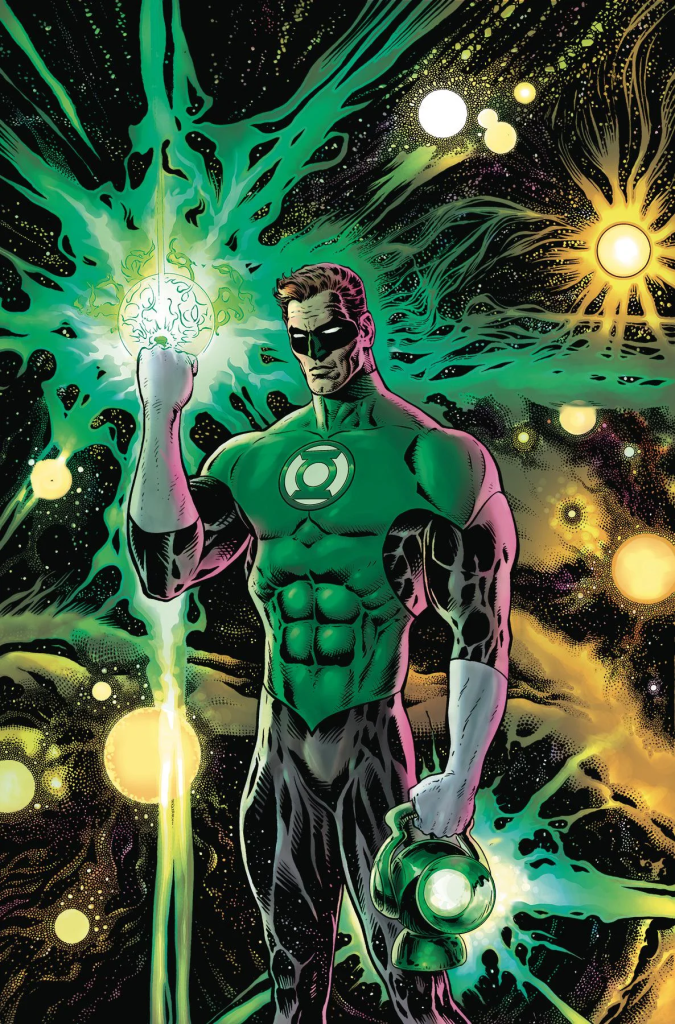
I love Green Lantern. It is my favorite comic concept ever created by a wide margin. I grew up on the Rebirth saga and some of the Silver Age. I have recently gotten back into it by reading the more modern stories. One run which has really stood out to me is Grant Morrison’s take on the universe, with a specific focus on Hal Jordan. So, since I am currently writing several other huge posts about lots of random things, including Green Lantern, I thought it would be fun to write a small review of this run with some general thoughts.
Grant Morrison’s run spanned from late 2018 until early 2021, featuring 27 issues and one annual, and was split into two ‘seasons’. This is long enough to require more than one day of careful reading but not so long as to be intimidating like the Johns era. To make my thoughts clear from the outset I generally enjoy this run but there are some flaws which really stifle my enjoyment.
The strongest (and weakest) part of this run is the degree of references and love that Morrison shows to the history and strangeness present in classical Green Lantern, and their rather novel take on the character of Hal Jordan. They bring back really fun and strange storylines like Myrwhydden, the magician inside Hal’s ring, the sentient planet named Green Lantern, Athmoora, and more.
One initially banal Silver Age relic, seen again and made interesting in Morrison’s run, is Myrwhydden and the world inside the ring. The world inside the ring, as seen in the Silver Age, is this rather generic sandy elseworld that is also used for planets like Qward, Oa, Xudar, early Korugar, etc. In addition to this rather uninteresting landscape, the magic present in the story feels more like comedic incantations from rhymezone rather than proper spells.
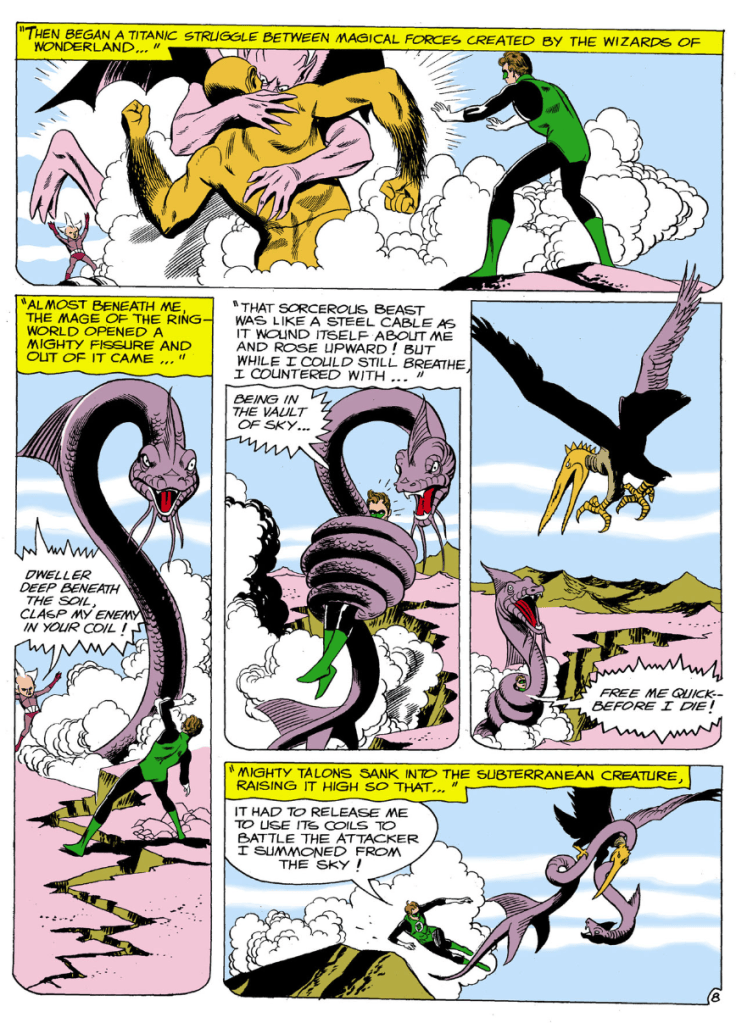
While these elements are certainly charming, they do not have much emotional subtext and are not deeply evocative. These are combined with the utterly goofy nature of Myrwhydden himself, being an almost farcical character. Overall the comic creates a fun B plot that is memorable for being silly rather than impactful or a means to truly further the Lantern mythos. (notably since the world does not ever come up again)
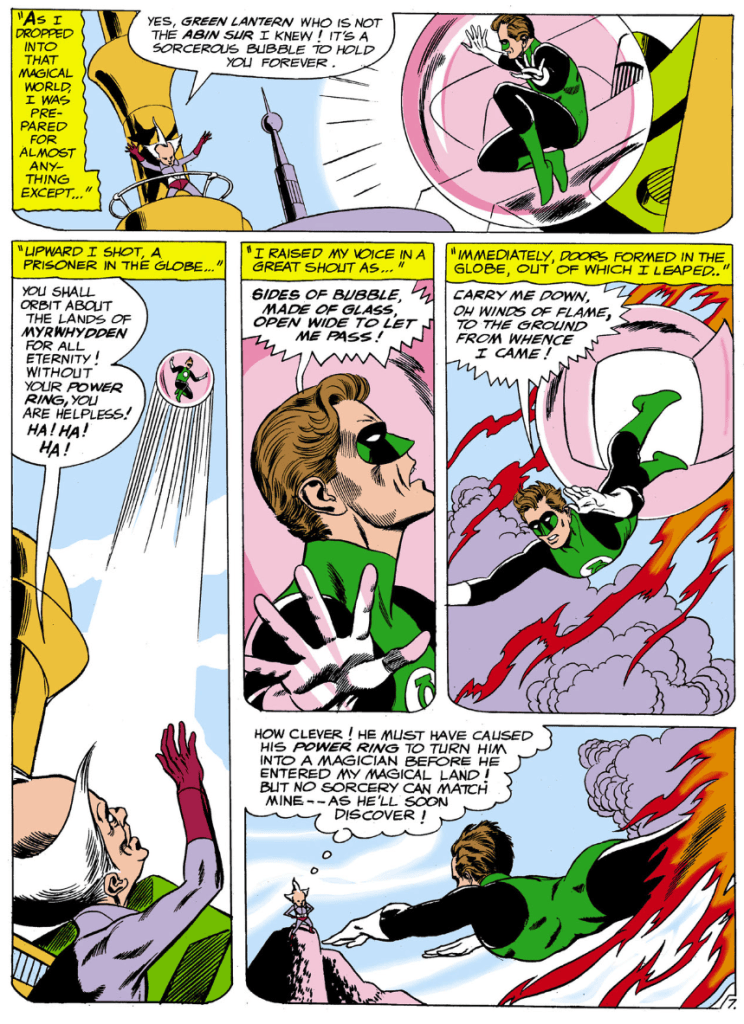
This problem is furthered by the A plot in Green Lantern #26 being the second story where Hal battles Star Sapphire, a far more interesting dynamic which does further the lore.
All that being said, the base concept is interesting. The ring having a whole world inside of it offers a lot of fun story ideas. (An adjacent concept was explored somewhat in Green Lantern #10) Notably, this world is inherently extrajudicial from the larger justice system of the Green Lanterns for one. Secondly, the concept deepens how mystical and strange the ring is. When boiled down to base ingredients, Morrison is working with one of the more pliable concepts from the time.
Morrison brings back this world and Myrwhydden in Season 1 #7 in a very different way. Their version is this dark and surreal landscape with ruins, floating clumps of rock, and anthropomorphic shark guards. This interpretation is already more surreal and fun than the Silver Age.
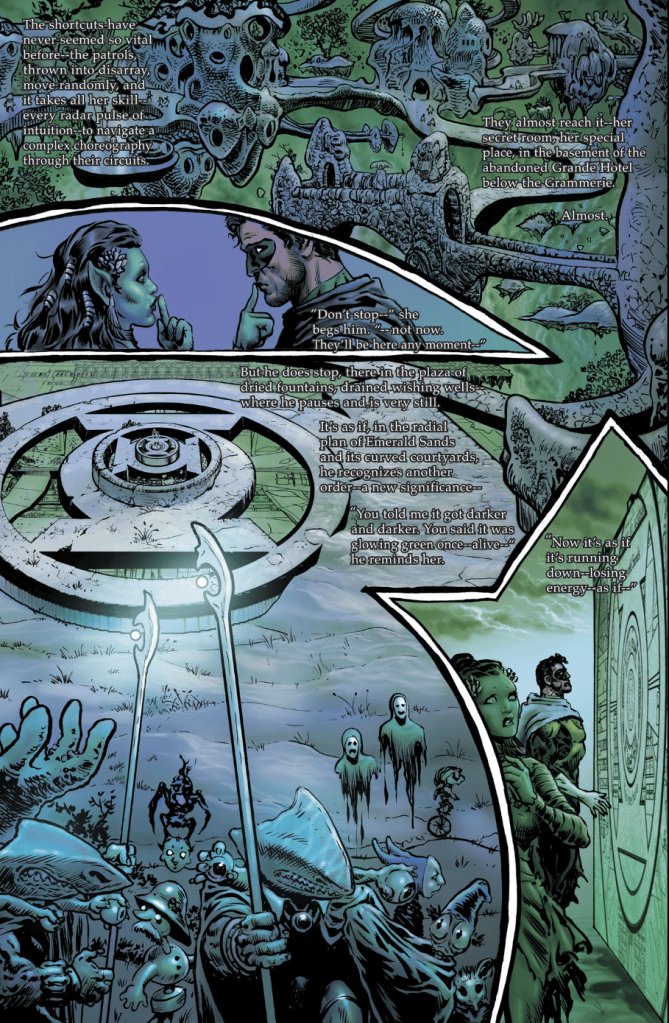
While this is already more visually interesting, even without additional subtext, Morrison makes clear that the messed up state of the world is directly due to the ring being close to dead. This literalization of a rather abstract idea like charge, and the effect it has on the physical land, is really clever. Metatextually, this also lends itself to a more surreal environment and a darker tone which lines up with the general art style of the run. Additionally, seeing this world out of balance mirrors Hal’s state of mind in this issue, and the interplay between Hal and his ring is furthered.
The world is even more interesting since the green woman, who is the avatar of the ring, also gets weaker and weaker as charge leaves the ring. This is an element that is entirely new. The ring has been semi sentient and talkative for a long time in Green Lantern (famously Guy’s ring takes shit to him) but this innovation is an emotionally powerful way to make Hal’s plight more personal and complex. Him needing to escape Myrwhydden and his dying ring, as a means of saving this whole world within the ring gives the reader a far more interesting reason to root for Hal. This stands in oppositoin to the original version which was just ‘do the thing, beat the guy’.
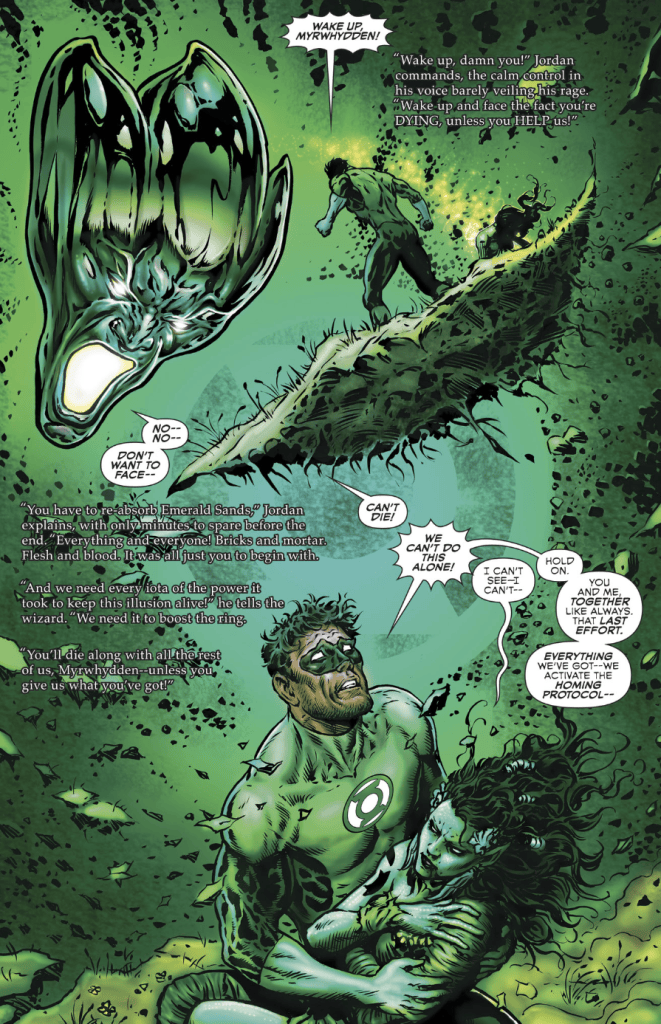
The ‘relationship’ Hal has with his ring is also something Morrison is engaging with. Hal is constantly forging, breaking, losing, rejecting, finding, etc rings all across his time as a Green Lantern. If we take the mainline continuity at face value he must have had a dozen different rings by now (alongside other powerful weapons). Morrison keeping Hal with his original ring (since Myrwhydden was imprisioned by Abin Sur who was the ring bearer before Hal and thus would be destroyed if Hal’s origional ring was destroyed) means that the relationship is more special and singular if we assume that the ring has some degree of sentience.
Throughout the run, Morrison does the same thing with Hal’s relationship to Carol, since there are no references to any of Hal’s other women, and Morrison makes the two of them more cosmically inseparable. Taken all together, this is a Hal Jordan who cares more for what he has and takes his life more seriously than in the past. This can be seen throughout Morrison’s run but is most obvious in the Myrwhydden arc. This take on Hal as a flawed but ultimately responsible and loyal person who cares is a different interpretation, but is in line with his more modern character. Morrison chooses to cut away all the fat and get to the core of Hal’s character, and to keep Hal consistent throughout their run. They succeed at this, their Hal is one of the more interesting versions of the character.
The ‘space cop’ attitude is the primary lens through which Morrison views Green Lantern, and thus their run has more interrogations, goodcop/badcop, detecting, etc than most Green Lantern runs. The police procedural element does not fully subsume the superhero archtype, but the degree of dichotomy is something rarely seen before. I really enjoy this because the detective side of Hal Jordan, when it has appeared, is one of my favorite elements of his character. While not as smart as characters like Batman, Hal has always been exceptionally smart and he uses his vast experience of the galaxy to do his job well.
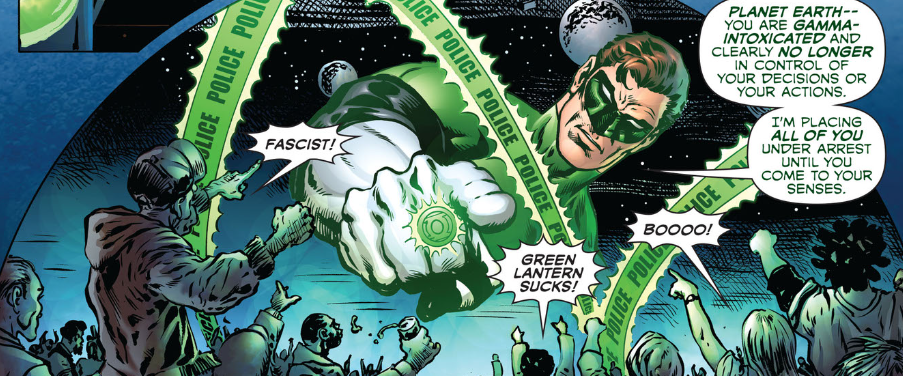
This ‘space cop’ focus is strengthened by the episodic nature of the run alongside the striking diversity of story settings and structures. A standout moment for cop Hal is the planet auction sequence in issue #3 when Hal arrests the planet Earth.
Overall there is a lot to love about this run. It is clear that Morrison is deeply familiar with the history of Green Lantern and wanted to bring back elements singularly from that time. It is also clear that they deliberately took a different approach to Hal’s characterization which fits the different thematic and narrative designs of the run. The only concern one could have about Hal’s character is that Morrison took away too much of his modern characterization in order to maintain the illusion of their run as a direct adaptation of Silver Age comics.
Unfortunately there are some issues with the run that make me not necessarily want to reread some parts. The most notable three are how Morrison uses the multiverse, the references again, and Athmoora.
I understand that Morrison is famed for their mapping of the DC multiverse and their Multiversity run. Complaining about a multiverse story in their work is like complaining that a character written by Stan Lee is a “Hero with a Flaw.” Despite this, I shall nonetheless make note of my dislike. While the multiverse story is interesting (Stoner Lantern is a highlight) I think it really takes away from the main focus of Morrison’s A plots. The multiverse arc is not truly relevant to either the battle with Controller Mu and the Darkstars, or the battle between the Green Lantern Corps and Qward. It is a significant sideplot that just makes the progression of the main plot make less sense. (This changes somewhat in season two, but by that point I was already checked out of the concept) I really enjoy the procedural and double agent storylines in season one and the antimatter universe story in season two, but these A plot stories are often made more confusing by the multiverse storylines. The whole alternate universe Carol plotline also feels somewhat contrived to cause needless strife since as said before, Hal is far more keen (but not 100% as that would be insanity) on monogamy in this universe.
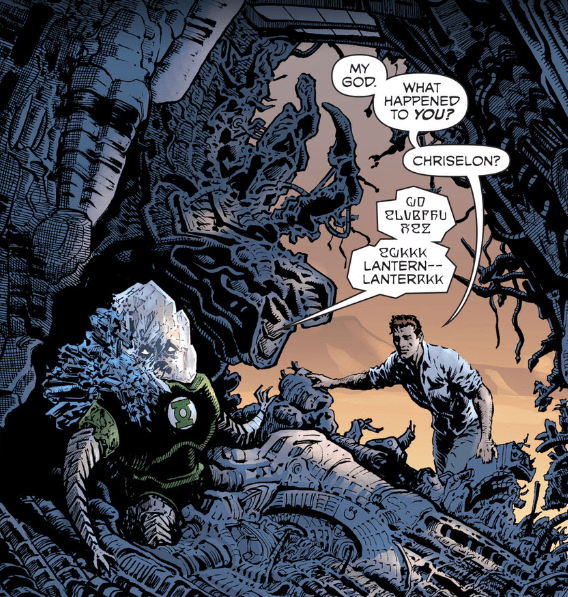
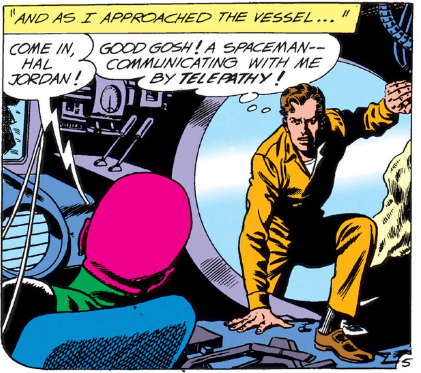
Despite my love of Morrison’s references, they do often feel like inside jokes and are never explained. Most are rather banal like the visual mirroring of Hal gaining his ring between Morrison’s issue #1 and Green Lantern issue #1 from 1960. (as seen below)
But others are far more oblique and do not really have the same thematic payoff. References like the giant golden baby people from Flash #120 (1959), or the bird people from Flash #125, or Xeen Arrow from Adventure Comics #253 (1958) are certainly interesting but feel like window dressing towards a weird revisionist Silver Age universe rather than truly relevant narrative additions.
In my reading I did not notice a lot of these references and in doing research for this piece I understood more of where things had come from, which did improve my enjoyment. But I strongly believe that one should not need to do huge levels of research to enjoy a comic run. Ironically, Silver Age comics were really keen on putting *s on references from outside the magazine or the far past, a facet of that time Morrison did not carry over.
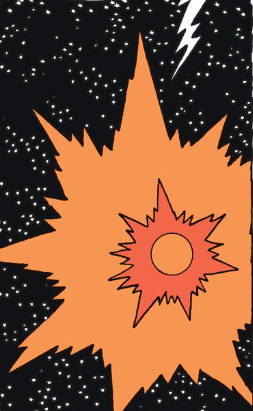
As my final major critique, Athmoora is another plot that is just a bit too strange and tonally inconsistent. The planet as seen in Green Lantern #16 from 1962 is a world where the inhabitants are stuck in the medieval age because these magic orange explosions have stolen the ‘I-factor’ from the people and thus stunted their evolution.
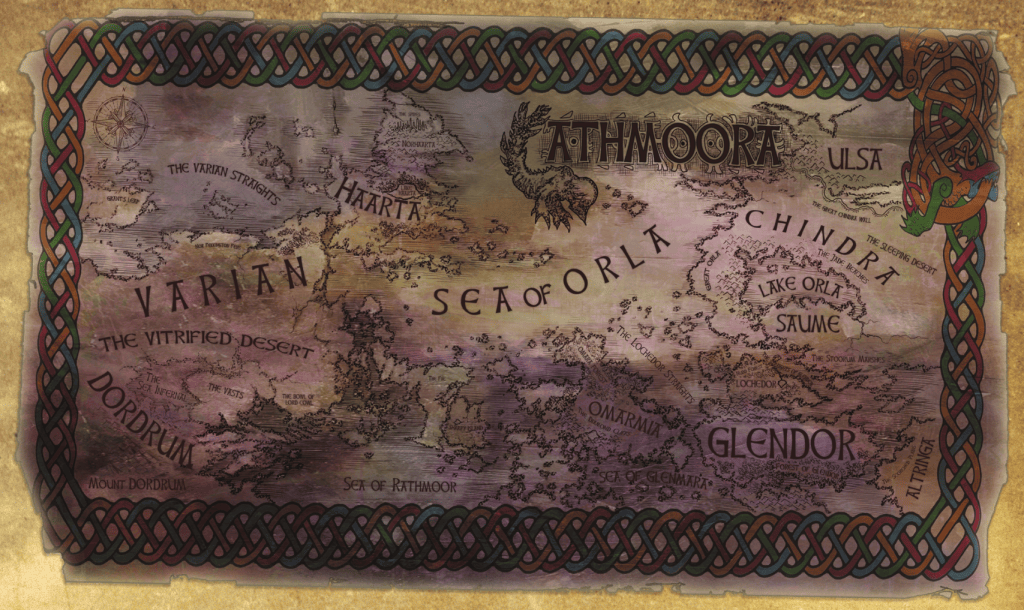
Morrison thankfully disregards this facet of the story, and focuses on the medieval planet part. In the collected version of Morrison’s run there is even a full fantasy style map of Athmoora.
While I enjoy the fantasy genre and think that the concept is cool, creating this fantasy ‘resort’ for Hal to play out his sword and sandal fantasy just does not work for me. It is such a huge left turn and is like Chandler writing that Marlowe every now and then does civil war reenactments, and the great final confrontation in the book occurs during the battle of the Wilderness. Athmoora is such a tonal nuclear bomb that it really destroys my ability to properly consume and enjoy the story being told if it involves the planet.
The concept is interesting, but Morrison gives it far too much airtime and narrative influence. As a tone shift it is destructive to my desire for rereading and is needlessly confusing and oblique I think.
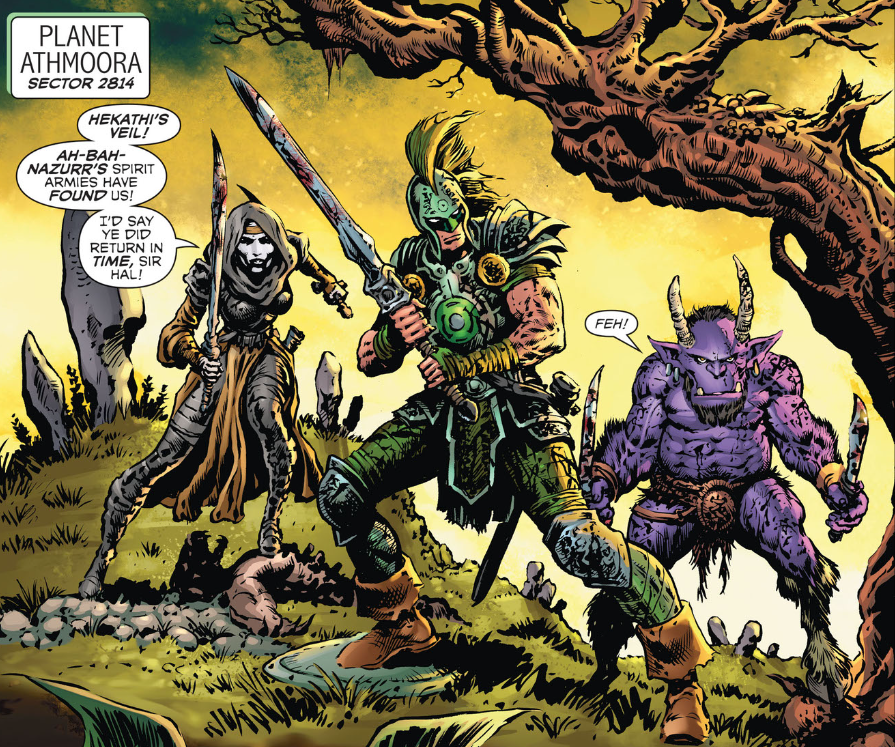
If Athmoora was a one issue planet and did not have such intense relevance to the overall narrative then I would not mention it. But Morrison keeps bringing it back as a strange intermezzo, yet with relevant plot details, which makes it hard to skip and ignore.
Since liking things is better than disliking them I shall return to the myriad moments that I really enjoy. The season 1 storyline where Hal ‘defects’ to the Darkstars and goes through all the trials is some of my favorite Green Lantern storytelling of the post Rebirth era. Addtionally, Morrison does a good job at drilling into Hal’s fraught relationship with the Corps. Since it is not revealed immediately that he is acting as a double agent, the reader really has to reckon with not only his removal from the Corps and his turn towards evil, but the general morality of the Corps writ large. A major thematic element present in the story is the questioning of how valuable the Green Lanterns actually are on galactic affairs.
This question is as much a metanarrative question as it is a practical one. Since comics as a continuous format need villains and evil to constantly return and cause problems, does the existence of the Green Lanterns invite writers to create galactic threats which perpetuate violence and thus are antithetical to their mission of peace? Morrison does not give a clear answer, but much like the questions posed in the Prometheus duology, the questions themselves are interesting and answers from the author only serve as intellectual limiters. Also the space vampire coven Hal gets involved with in this arc due to his defection is super neat.
Truly rating this run is hard. As a seasoned Green Lantern reader I will think better of it than someone picking it up at their local comic shop. This is to the point that I would actively not recommend it for anyone besides those familiar with the inspirations at work. Yet, I do like it. Season one is by far the stronger season, but there is much to enjoy with the second season. The art is wonderful, and there are several interesting structural choices made. It feels rather incumbent upon me to split my review along the lines of experience and between myself and others. This run is both hard and easy to recommend, but with a strong ‘*’ no matter what.
For an experienced reader 6 or 7/10
For a novice reader 3/10
My personal score 7/10


Leave a Reply